Updates

02/14/2012

Rocky Baker of the Idaho Statesman tells how our work is influencing Idaho's plan to protect sage-grouse.

02/08/2012

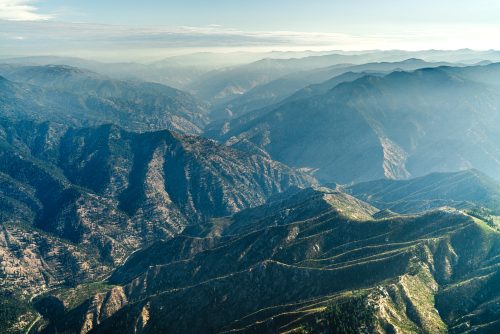
Gary Grimm of Mountain Visions joined Idaho Conservation Leauge, Golden Eagle Audubon Society, Sierra Club and Advocates for the West on a tour of the proposed CuMo Mine site in southwest Idaho. His video will introduce you to the area.

Read more about our CuMo Mine case.

Questions about the case? Contact Advocates for the West attorney Bryan Hurlbutt.

02/07/2012

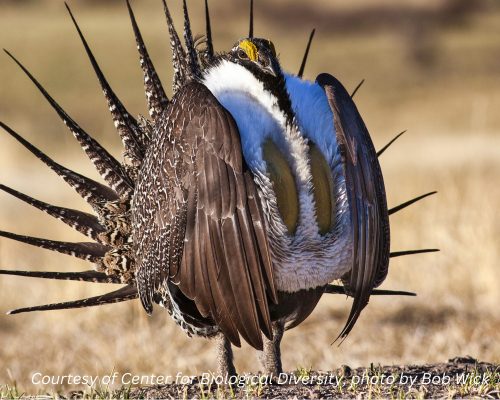
On Monday, February 6, 2012, the federal court in Idaho issued a strong rebuke of the BLM in Advocates for the Wests Great Basin sage-grouse case, and required increased protections for Greater sage-grouse across a vast swath of southern Idaho.  In its 55-page order, the court found that BLM violated our principle environmental laws and policies - including the National Environmental Policy Act, the Federal Land Policy and Management Act, and the Fundamentals of Rangeland Health, as well as the governing land use plans - in approving status quo grazing in southwestern Idaho.

More specifically, the court first held that BLM violated NEPA by ignoring the cumulative impacts of its grazing decisions on populations and habitat for the Greater sage-grouse, an endemic bird whose populations are crashing and habitat is being destroyed.  The court next found that BLM's proposed measures to protect sage-grouse - including increased grazing; more fences, pipelines and other wildland developments; and eliminating most measurable standards governing grazing - would harm sage-grouse populations in the Owyhee and Bruneau Field Offices, in violation of the Fundamentals.

Most importantly, perhaps, the court also held that BLM's governing land use plans require the agency to prioritize sage-grouse habitat above livestock grazing, and the court held that if grazing and sage-grouse are in conflict, "it is grazing that must yield."

This case will now turn to remedies, where Advocates for the West will seek to apply these legal principles to ensure that Greater sage-grouse populations and habitat are protected as required under our environmental laws.  Advocates for the West would like to thank its conservation partner and client Western Watersheds Project, and specifically WWP's Biodiversity Director Katie Fite and NEPA Coordinator Ken Cole for their tireless efforts on this case.

02/03/2012

Read all about the conservation cases our team took on in 2011.

01/27/2012

If you are in Boise next Monday, January 30, come watch Advocates for the West attorney Todd Tucci in action. He'll be using his legal expertise to protect the Great Basin population of Greater sage-grouse. Judge Winmill will preside. Kristin Ruether will provide co-counsel.

We are pleased to represent Western Watersheds Project.

Come support the Advocates for the West team as they work to safeguard the West's iconic wildlife and special places!

Monday January 30, 10:00am

US District Court 550 W. Fort St., Courtroom 3, Boise


01/27/2012

Just this week, the U.S. District Court for the District of Arizona ruled in our favor in the Fossil Creek case challenging a U.S. Forest Service plan to allow livestock grazing in habitat for the threatened Chiricahua leopard frog in central Arizona's Coconino National Forest.

The court held that the Forest Service violated the National Environmental Policy Act (NEPA) and the U.S. Fish and Widlife Service violated the Endangered Species Act (ESA). This case will force the agencies to reexamine their grazing systems to ensure that the ecological needs of the forests and imperiled wildlife species are met before permitting livestock in these fragile desert ecosystems.

Stay tuned, though, because this case may just be getting interesting as the parties are commencing the remedies phase of this litigation, which means that Advocates for the West will be asking for some injunctive relief modifying or barring livestock grazing until the agencies comply with the law.

Advocates for the West attorney Todd Tucci represented our conservation partner Center for Biological Diversity in this case.


01/25/2012

Two Mining Projects Threaten Health of Boise River

Please attend the Idaho Families for Clean Water presentation on the CuMo mineral exploration project in the Grimes Creek watershed and the Atlanta Gold exploration project in the Middle Fork Boise watershed.

January 25, 7:00pm, MK Nature Center, 600 S. Walnut Street, Boise, Idaho.

There is important information to share about both mineral exploration projects.

* Atlanta Gold Company continues to discharge arsenic-laden water to a tributary of the Middle Fork Boise River. Kristin Ruether, Advocates for the West, will report on the court action against Atlanta Gold.

* Local groups have sued the Forest Service for allowing Mosquito Gold to expand exploration activities without adequate enviornmental review. Bryan Hurlbutt, Advocates for the West, will report on the case.

* We've captured many fantastic images of the Grimes Creek watershed and the proposed site of the CuMo mega mine. Mountain Visions has created a multimedia presentation using the latest in digital technology that takes the audience right to the site.

We'll have refreshments, and there will plenty of time for questions.

01/13/2012

Monday January 9, U.S. District Chief Magistrate Judge Williams determined Atlanta
Gold Corporation is illegally polluting Montezuma Creek, a tributary of the
Boise River near Atlanta, Idaho, with toxic levels of arsenic and iron,
constituting over 1,400 violations of the Clean Water Act.

The Idaho Conservation League and Northwest Environmental Defense Center,
represented by Advocates for the West, had brought a Clean Water Act suit
against the company for illegal discharges of arsenic and iron.

"From fishermen to families, this is a huge victory for everyone who values
clean water," said Andrew Hawley with the Northwest Environmental Defense
Center.

"This is a strong message to Atlanta Gold ­ and to any other Canadian mining
company that wants to open up shop in Idaho ­ that the public will hold them
responsible if they pollute Idaho's rivers and streams," said John Robison,
Public Lands Director of the Idaho Conservation League. "Mining companies
who promise one thing and then try to walk away and leave the public with
polluted and expensive cleanup costs are not welcome here."

The arsenic and iron are discharging from mine workings that Atlanta Gold
controls. The U.S. Forest Service found that Atlanta Gold's exploration
activity likely worsened the arsenic flows coming from a historic mine
shaft.

Atlanta Gold had previously committed to cleaning up the arsenic. Following
a settlement with the Idaho Conservation League over the arsenic pollution,
Atlanta Gold constructed a pilot water treatment facility and obtained a
permit from the EPA which limited the amount of arsenic they could release.

However, Atlanta Gold never complied with the terms of the permit. At times,
the arsenic levels were more than 400 times Idaho's drinking water
standards. The Boise River provides over 20% of the City of Boise¹s drinking
water.

"Judge Williams affirmed that Atlanta Gold Corporation is liable for these
violations and can't simply walk away from its pollution. The next stage is
determining what is going to be required of Atlanta Gold Corporation to
clean up their toxic mining pollution and what penalties are in order," said
Laird Lucas, Advocates for the West.

01/03/2012

On January 3, 2012, Advocates for the West filed a complaint on behalf of Idaho Conservation League against EPA for failing to comply with its duty under the Clean Water Act to either approve or disapprove Idaho water quality standards which aim to protect people who consume fish caught in Idaho's lakes and rivers from toxins.  The State of Idaho adopted the water quality standards in 2006, and the standards reflect an increase in the estimated fish consumption rate in Idaho.  Until EPA takes action, people who consume large amounts of fish caught in Idaho risk excessive exposure to toxins.

12/15/2011

Today, Advocates for the West submitted the Opening Brief on behalf of Idaho Conservation League, Idaho Rivers United, and Golden Eagle Audubon Society in a challenge to the Forest Service approval of Canadian mining company Mosquito Gold’s plan to explore for copper and molybdenum in the headwaters of Grimes Creek on nearly 3000 acres of Boise National Forest land.

The mountainous project site, located 14 miles north of Idaho City, consists mostly of ponderosa pine and Douglas fir forest and is dissected by many tributaries of Grimes Creek.  The site provides suitable habitat for numerous species of wildlife, including “sensitive species” such as great grey owl, northern goshawk, and wolverine.  The rare flower Sacajawea’s bitterroot—known to exist only in central Idaho’s mountains—inhabits the site.  

Despite Mosquito Gold’s ambitious proposal to clear 69 acres of vegetated land, build over 10 miles of new roads and 137 drill pads and mud pits, and operate four drilling rigs 24/7 throughout most of the year to drill 259 exploratory wells up to 3,000 feet deep, the Forest Service made a “finding of no significant impact” and approved the exploration.

The Opening Brief asks the Federal Court for the District of Idaho to halt Mosquito’s exploration and have the Forest Service conduct necessary studies on sensitive species and consider the water quality impacts from drilling adjacent to contaminated historic mining sites.